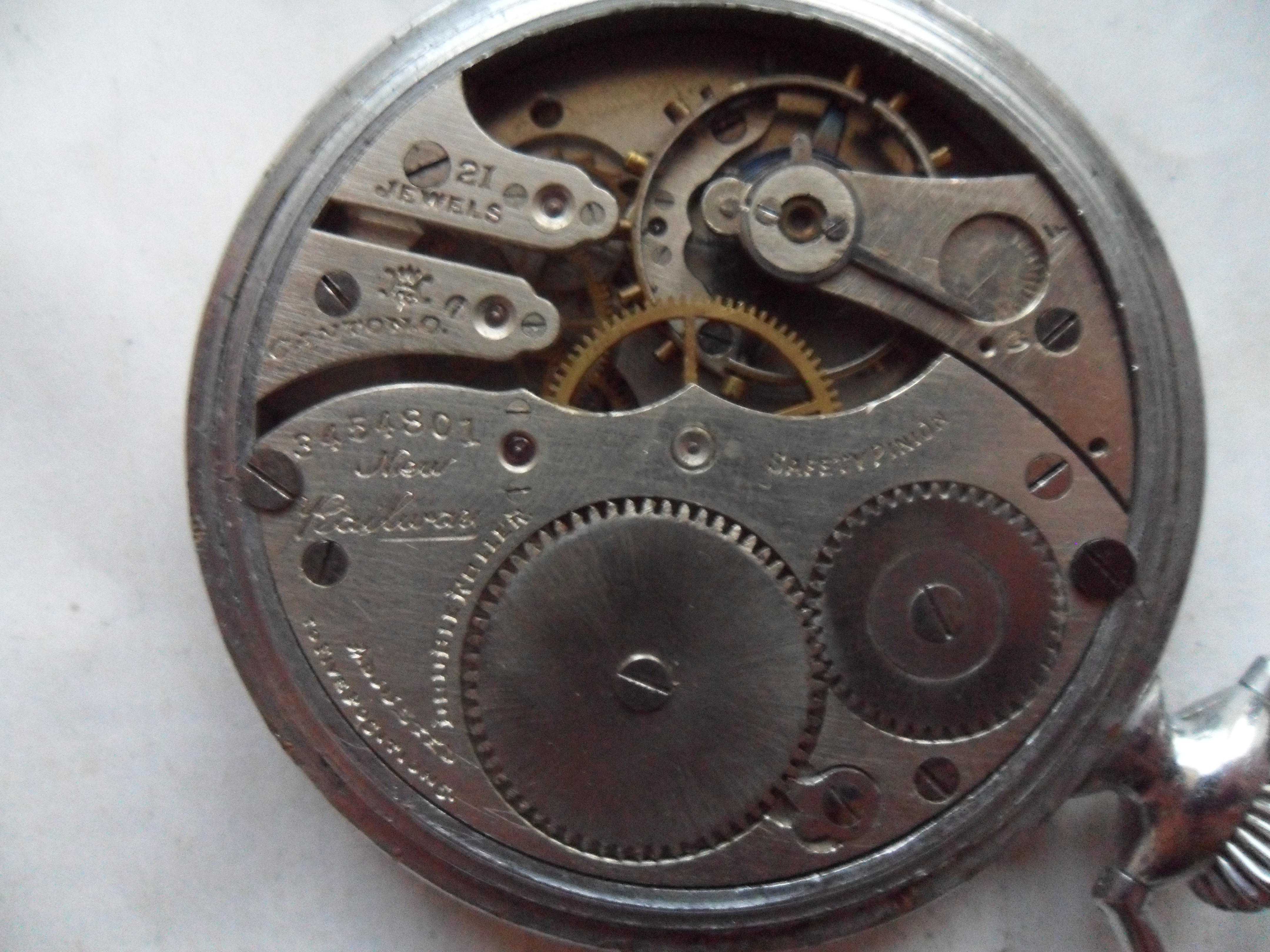
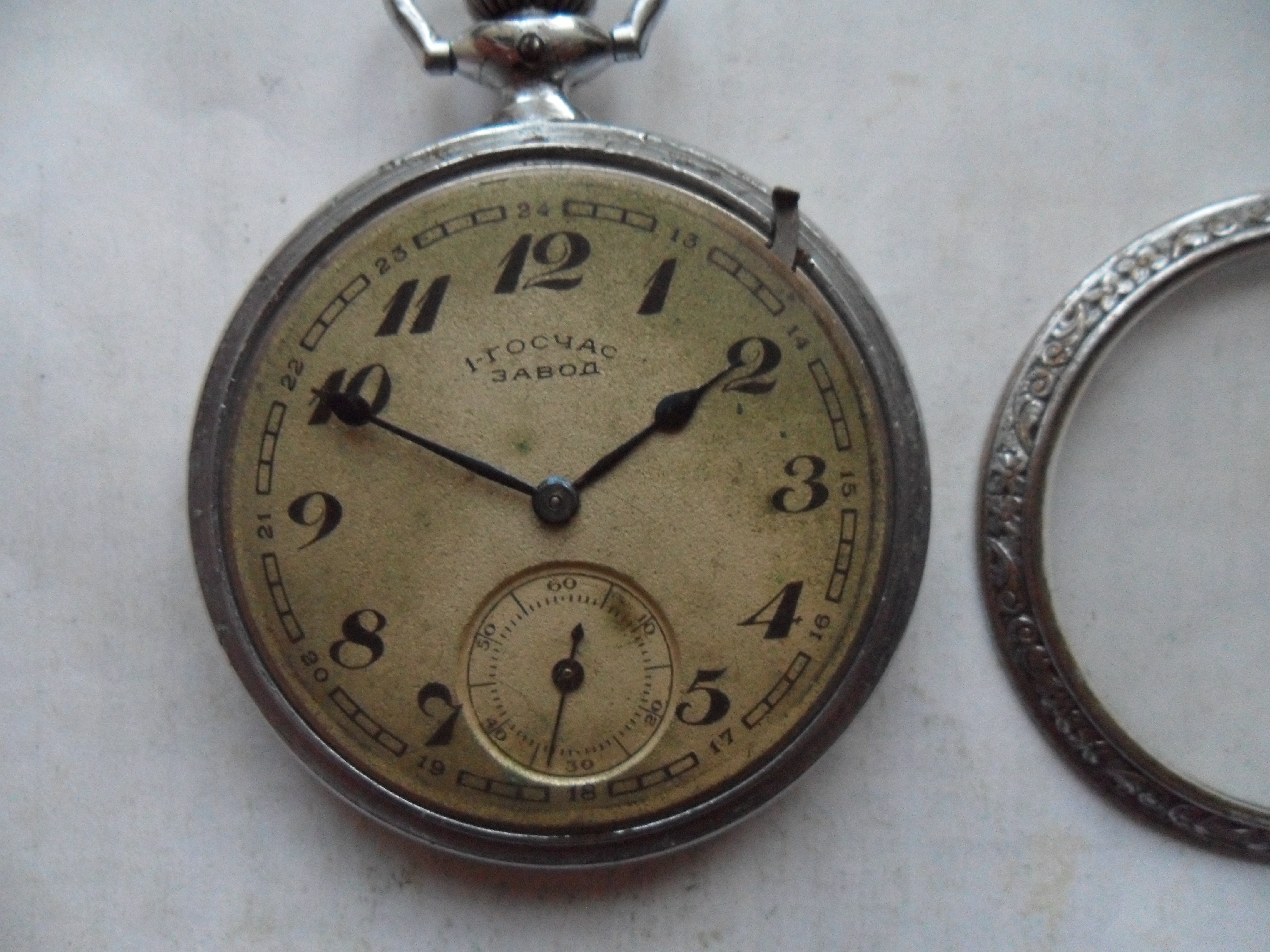
Не исключено что цифер закрепили лаком что бы дальше не осыпался.
В принципе все на фото.


Пусть будет златоуст.straight time писал(а):Златоуст, не 2МЧЗ
Цена?
Ребята спасибо - но они мне достались немного дороже, чем вы предлагаете.straight time писал(а):1500



А разве механизм с циферблатом не 1 ГЧЗ?straight time писал(а):Златоуст, не 2МЧЗ
Ну да, цифер и мех - 1 ГЧЗMajk писал(а):А разве механизм с циферблатом не 1 ГЧЗ?straight time писал(а):Златоуст, не 2МЧЗ
Корпус 2 ГЧЗ или Чистополь.
Это понятно,но тип механизма 1 ГЧЗ,Златоустовские чуть другие.straight time писал(а):1 ГЧЗ переведен в Златоуст в 1941 году - движение датировано 1944 годом, поэтому ...

У вас механизм аж 58 года.Прошло 14 лет.Majk писал(а):Это понятно,но тип механизма 1 ГЧЗ,Златоустовские чуть другие.straight time писал(а):1 ГЧЗ переведен в Златоуст в 1941 году - движение датировано 1944 годом, поэтому ...
Majk писал(а):Это понятно,но тип механизма 1 ГЧЗ,Златоустовские чуть другие.
Всё это понятно,тогда следуя вашей логике чей это механизм?straight time писал(а):Majk писал(а):
производство 1-го типа никогда не возобновлялось в 1ГЧЗ после того, как завод был перемещен.
поэтому любое движение в стиле 1ГЧЗ, с датой с 1942 года или позже, производится в Златоусте.
(по крайней мере, это то, что я узнал - я рад это исправить, если есть новые доказательства)


Нет,Вы не угадали,следуя Вашей логике это мех 1 ГЧЗ.straight time писал(а):Dueber-Hampden "New Railway" (Новая железная дорога), размер 16, 21 камень (В нем отсутствует часть системы тонкого регулирования).
Одно из движений, которое Советы купили у американцев вместе с оборудованием, которые были установлены в карманных часах, прежде чем они выпустили собственное производство.. Вы можете увидеть мой пример здесь
http://forums.watchuseek.com/f10/early- ... 29490.html
(теперь я думаю, что мы должны прекратить наводнение темы, или кто-то побьет нас...)
Златоуст конечно. только барабанное колесо от 2 чз.straight time писал(а):Златоуст, не 2МЧЗ
златоустовские послевоенные другие.те что с 46 года пошли, если память мне не изменяет.Majk писал(а):Это понятно,но тип механизма 1 ГЧЗ,Златоустовские чуть другие.straight time писал(а):1 ГЧЗ переведен в Златоуст в 1941 году - движение датировано 1944 годом, поэтому ...
Спасибо за предложение.russii писал(а):Предложу 3000 руб.


всего лишь 15 камнейstraight time писал(а):Dueber-Hampden "New Railway" (Новая железная дорога), размер 16, 21 камень


http://www.railswest.com/time/hampden.htmlAlthough higher-jeweled watches had been available for decades, most high grade watches only had 15 jewels. Hampden was the first to mass produce and heavily promote 17-jewel watches. In 1891, Hampden created an advertising campaign for their new line of 17-jewel watches that lasted for years. The 18-size, 17-jewel Special Railway grade and 18-size, 17-jewel New Railway grade were part of the new group of watches introduced in the 1891 advertising campaign, both were advertised as adjusted to temperature and six positions, available as open face or hunting, and "particularly desirable and specially recommended to meet the requirements of the railway service." This line also included the Anchor grade (hunting or open face), No. 48 (hunting case) and No. 68 (open Face), all 17-jewel adjusted to temperature and positions. Also included were the John C. Dueber grade, No. 43 (hunting case) and No. 63 (open Face) 17-jewel adjusted to temperature1. The 18-size, 15-jewel Railway grade was discontinued with the introduction of the new 17-jewel line.
In pushing its line of 17-jewel watches, Hampden started a jewel count escalation that, over the next ten years, resulted in 21 and 23 jewel watches becoming commonplace.
In 1896 an 18-size, 23-jewel Special Railway grade was introduced, and in 1900 an 18-size, 21-jewel Special Railway grade was introduced.
Additional 18-size railroad grade movements included the 21-jewel John Hancock grade, adjusted to 5 positions, the 21-jewel North American Railway grade, adjusted to 5 positions, and the 21-jewel John C. Dueber grade, also adjusted to 5 positions.
In July 1900 the Hampden Watch Company secured the trademark rights to the word "Railway" on a watch
16-size Watches for Railroad Service
Popularity of 16-size movements increased after the establishment of railroad standards in 1892, reaching 15% of watch sales by the turn of the century. During the mid-1890's Hampden introduced the 16-size, 23-jewel, model 2 grade No. 104, one of the companies highest grade watches, available in both open face and hunting configurations. A 23-jewel, model 2 grade No. 105 was also released.
A thinner 16-size, 23-jewel, model 4 grade No. 104, was introduced in late 1902, along with the 21-jewel model 4 grade No. 105, the 21-jewel, model 2 Wm. McKinley grade, and the 19-jewel model 4 Railway grade. A 16-size, 23-jewel model 5 No. 105 grade was introduced around 1917. A 16-size, 23-jewel model 5 Special Railway grade was introduced around 1920.
The Dueber Watch Case Manufacturing Co. and Hampden Watch Co. businesses were formally combined 1923. Dueber-Hampden remained Dueber family owned until Albert M. Dueber, John Dueber's son, sold the business to a group of Cleveland, Ohio businessmen in September 1925.
The combined Dueber-Hampden operation continued in business, producing both movements and cases (and marketing them as complete watches) until falling sales led to receivership in 1927. The manufacturing equipment, parts on hand, and work in progress were sold to Russia. Operations ceased in 1930 when the machinery was shipped to Russia, the equipment is reported to have filled 28 freight cars.
Hampden railroad grade watches (not all were railroad approved)
The following is from list of railroad grade watches which is generally attributed Webb C. Ball. Not all of these were railroad approved even though all were listed as railroad grade.
18 Size:
Special Railway, 17J, 21J, 23J
New Railway, 23J & 17J
North Am. R.R., 21J
Wm. McKinley, 21J
John Hancock, 21J & 23J
John C. Dueber, 21J, 18S
16 Size:
105, 21J
104, 23J
John C. Dueber, 21J
Wm McKinley, 17, 21J
New Railway, 21J
Railway, 19J
Special Railway, 23J, 16S
Сейчас этот форум просматривают: нет зарегистрированных пользователей и 2 гостя